

Toyota vs Honda: The Reliability Verdict | Merit Auto Group Meta
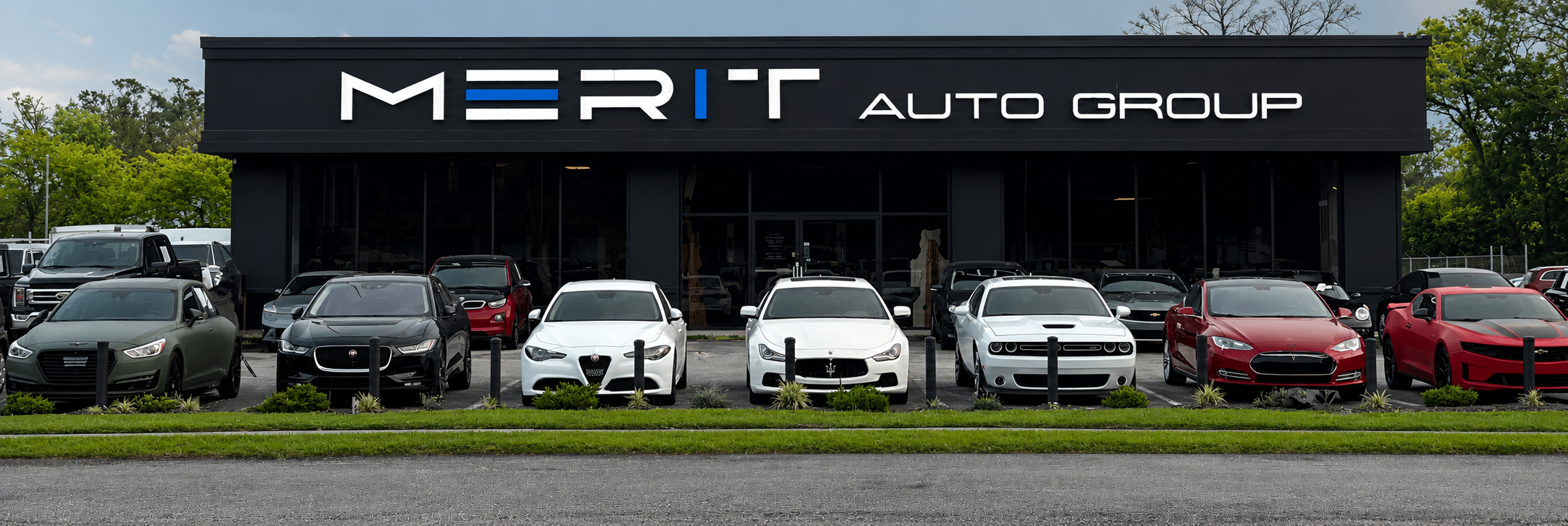
Both are excellent. The specific car decides reliability, not the badge.
Ask ten mechanics which brand lasts longer and most give the same shrug: both are excellent, and the gap between a well-kept Camry and a well-kept Accord is narrower than the comment sections claim. What actually decides reliability on a used car is the individual vehicle's service history, its mileage, and how the previous owner treated it.
That is exactly the part the brand debate skips. A 2018 Camry with skipped oil changes is a worse bet than a documented 2018 Accord with every service stamped.
We see this firsthand. Last month our inspection team pulled a clean-looking Toyota off a trade and found coolant cross-contamination the Carfax never showed. We declined to retail it and sent it to wholesale instead.
Badge loyalty would not have caught that. A 70-point pre-purchase inspection did.
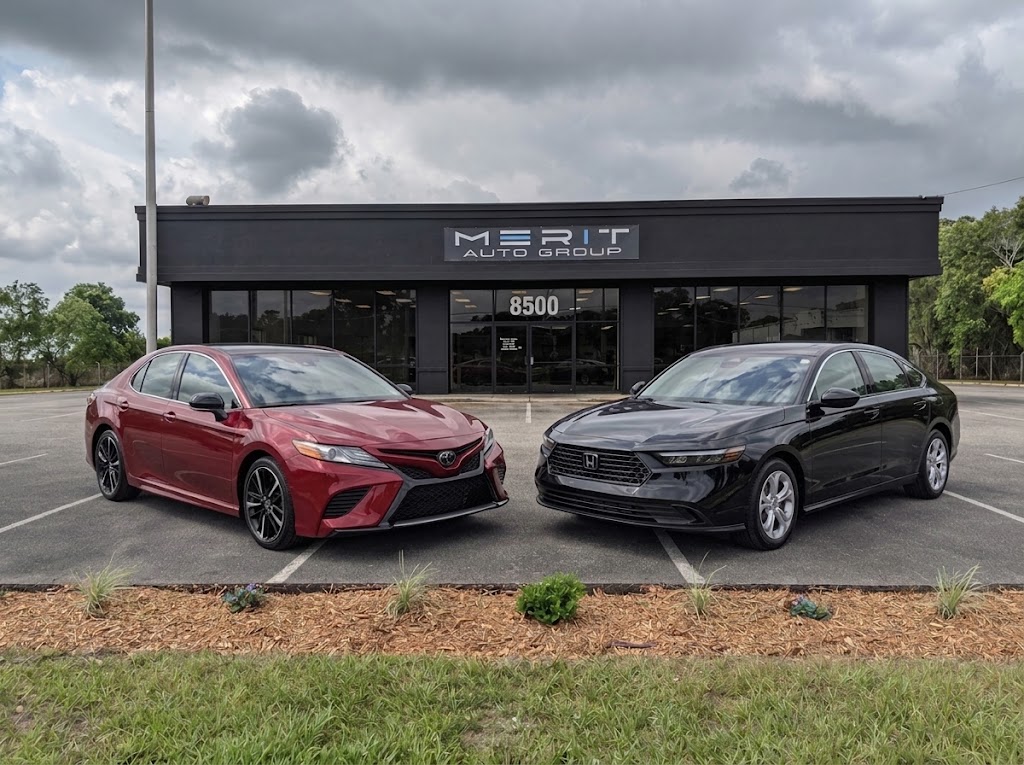
So before you pick a side, pick a vehicle that has been inspected and documented. Then let the brand strengths break the tie.
By George, Finance Manager at Merit Auto Group, Jacksonville, FL.
Where the reliability numbers actually come from.
There is no single "reliability score," so it helps to know where the numbers Jacksonville shoppers quote come from.
- J.D. Power Vehicle Dependability Study measures problems per 100 vehicles over three years of ownership. In its published 2024 study, Toyota and Lexus both ranked among the most dependable mainstream and premium brands, with Toyota's mass-market scores consistently above the industry average.
- Consumer Reports reliability ratings survey hundreds of thousands of owners. In its annual brand rankings, Toyota and Honda routinely finish in the top tier, with the Toyota Corolla, RAV4, Honda CR-V, and Honda Accord landing on its recommended lists year after year.
- Recall and complaint data is public. The federal NHTSA database lets you type any VIN or model and see open recalls and owner-filed complaints, the single most useful free reliability tool most buyers never open.
01 / 04
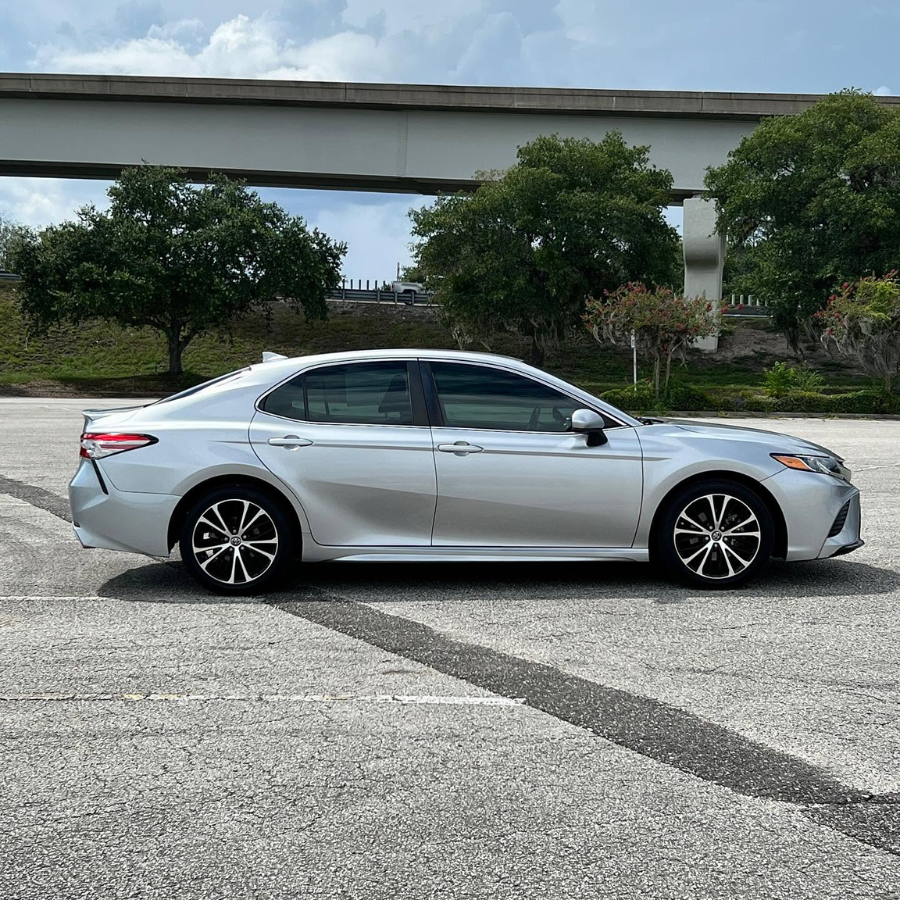
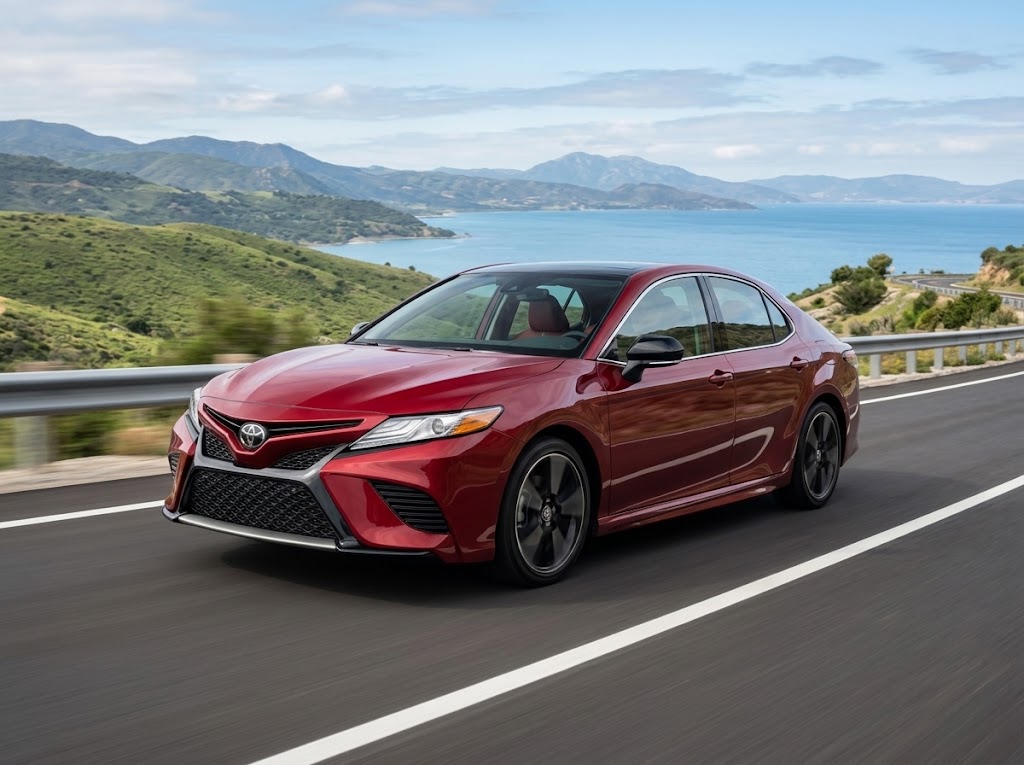
Camry · side profile
Toyota’s long-term reliability is the reason this generation of Camry holds its value on our lot.
02 / 04
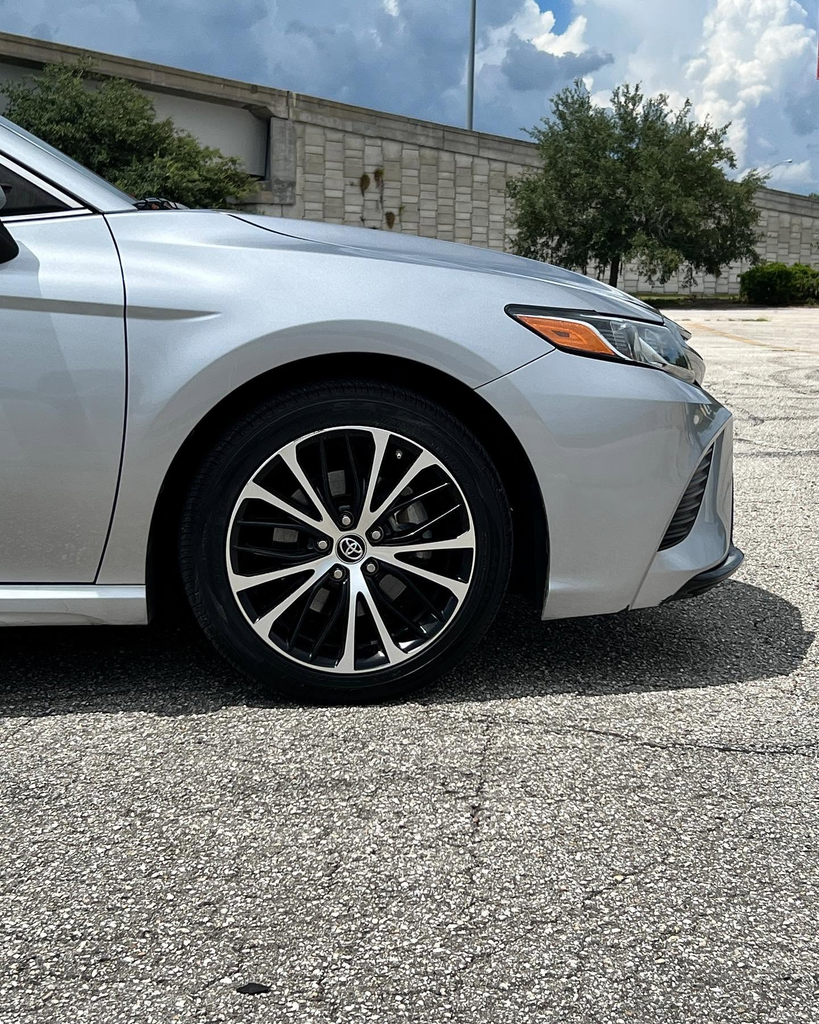
Wheels & tyres
Tyre wear and brake condition are two of the 27 points we check before a car goes on the line.

03 / 04
Rear panel & lamps
Panel gaps and lamp condition are quick tells for prior accident repair.
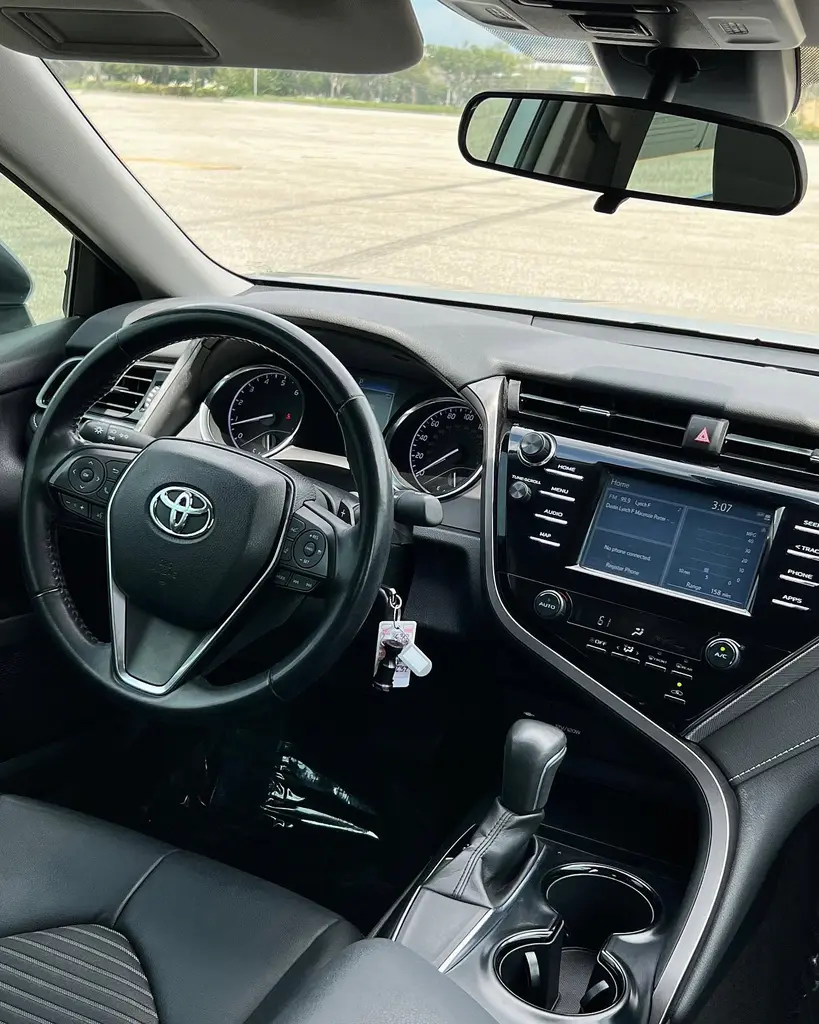
04 / 04
Cabin condition
Interior wear tells you how the previous owner actually treated the car.
The takeaway from all three: neither brand has a structural reliability problem. The difference is at the margins, and the margins move depending on the exact model and model year.
One more thing the scores will not tell you: model years matter as much as brands. The Camry and Accord both had transmission and refinement quirks in specific older generations, then got noticeably better.
A buyer came in last spring set on “a Honda, any Honda.” We walked him off a tired high-mileage Civic and into a lower-mileage CR-V from the same budget, because the specific car was the better machine. He left happier, and we left with a customer who trusted the advice.
That is the whole point: the year and the upkeep decide more than the wing badge.
Where Toyota pulls ahead.
Toyota's reputation rests on real strengths that hold up for high-mileage Florida drivers.
- Powertrain longevity. Toyota's four-cylinders and its hybrid systems have a long, documented track record of crossing 200,000 miles on routine maintenance. Toyota's own hybrid battery coverage runs 10 years or 150,000 miles on 2020-and-newer hybrids, which tells you how confident the engineering team is in the system.
- Resale value. RAV4 and Tacoma are perennial resale leaders. Kelley Blue Book's Best Resale Value awards repeatedly put the Tacoma and 4Runner at the top of the trucks-and-SUVs category, which protects you on the back end when you trade up.
- Fuel economy on hybrids. A current RAV4 Hybrid is EPA-rated at 39 MPG combined; the standard RAV4 lands near 30 MPG combined. On a 30-mile-a-day Jacksonville commute, that gap pays for itself.
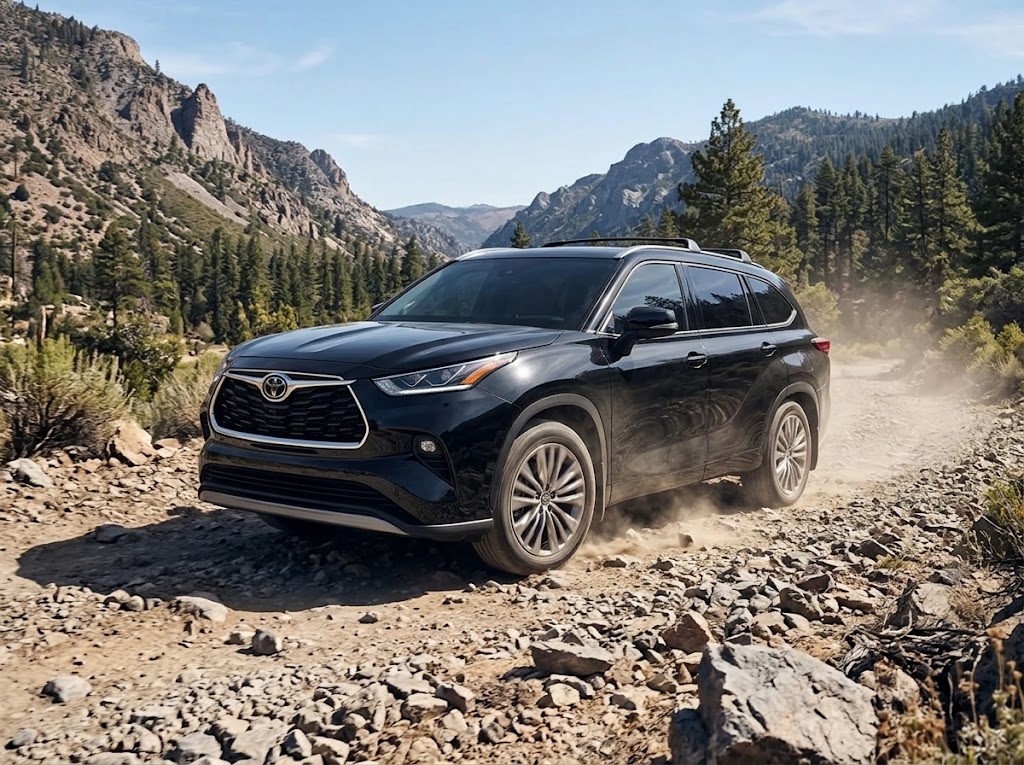
For an upgrader who plans to keep a vehicle a long time and rack up I-95 and I-295 miles, that durability-plus-resale combination is the core of Toyota's case.
Where Honda answers back.
Honda does not trail by much, and in several areas it leads.

01 / 05
Civic Sport · rear three-quarter
The Civic Sport is the Honda that makes the driving-dynamics argument loudest.
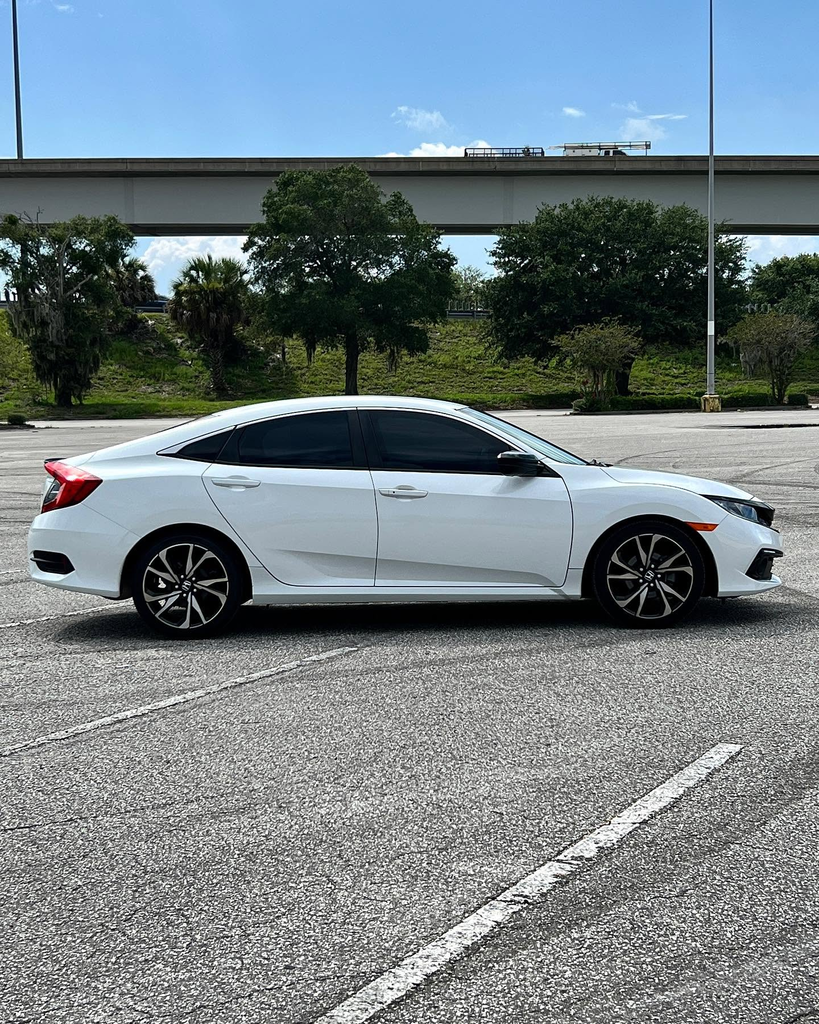
02 / 05
Stance & wheelbase
A low roofline and a long wheelbase are why the Civic feels planted on the daily loop.
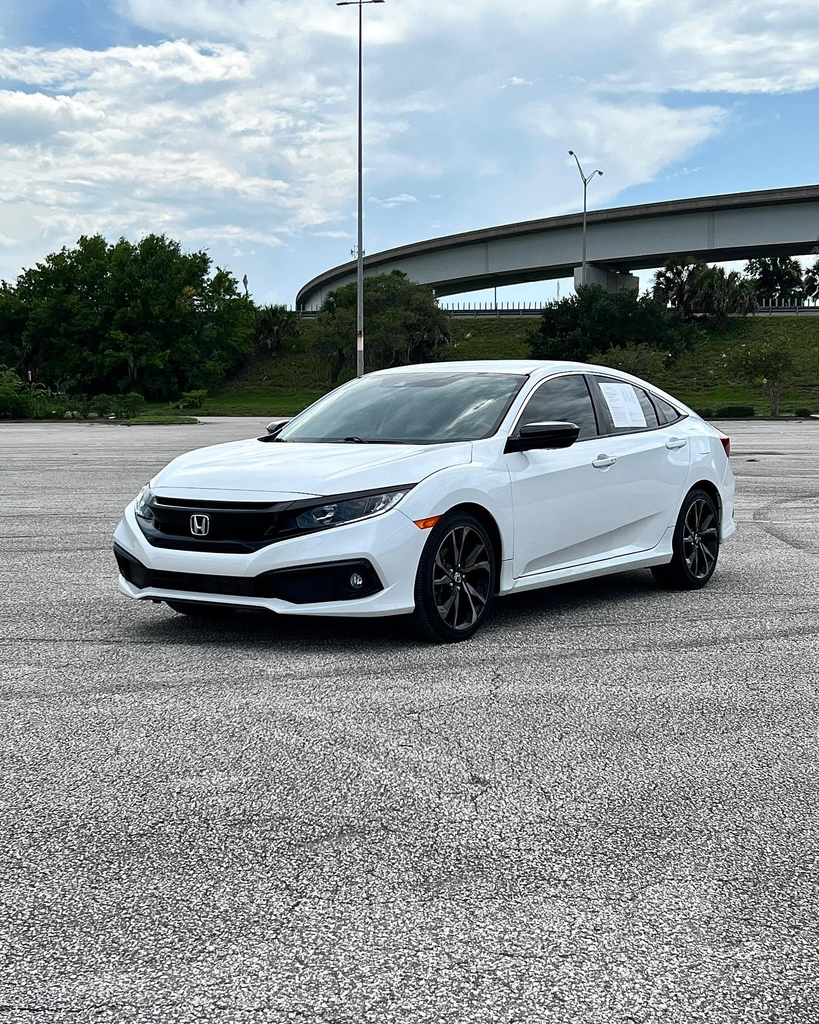
03 / 05
Panel gaps & paint match
Across the nose, these are the first things we check on any trade-in.
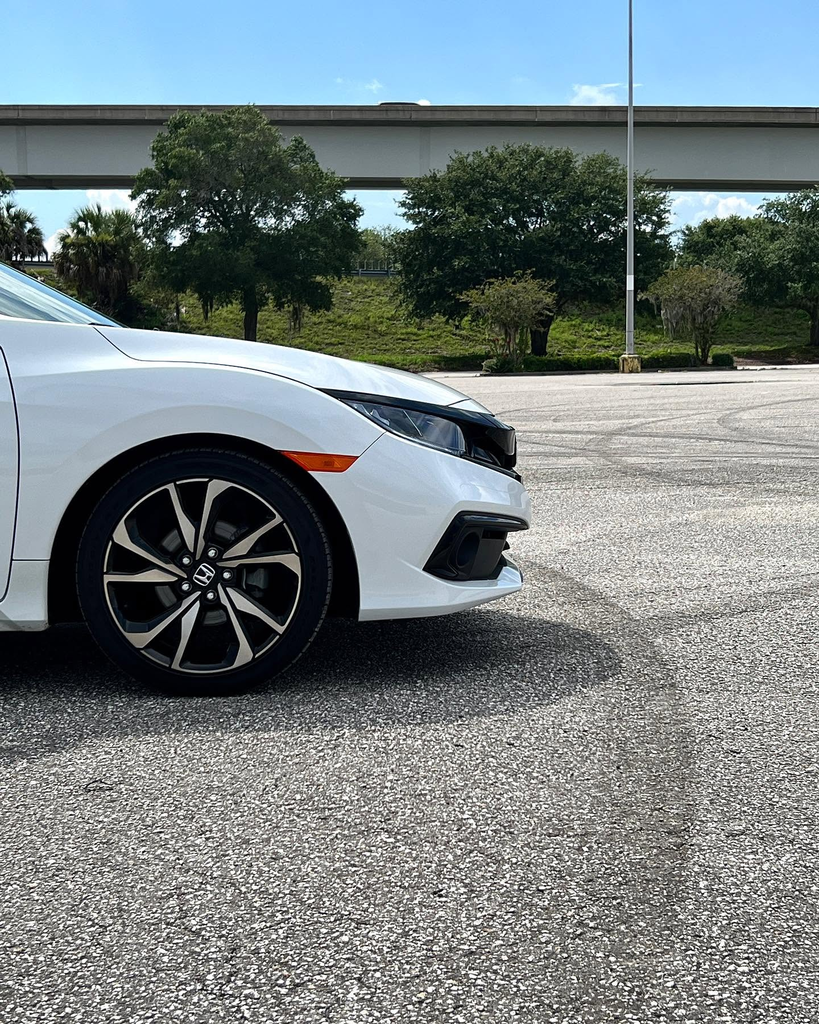
04 / 05
Wheels & alignment
Uneven shoulder wear here usually means alignment, not tyres.
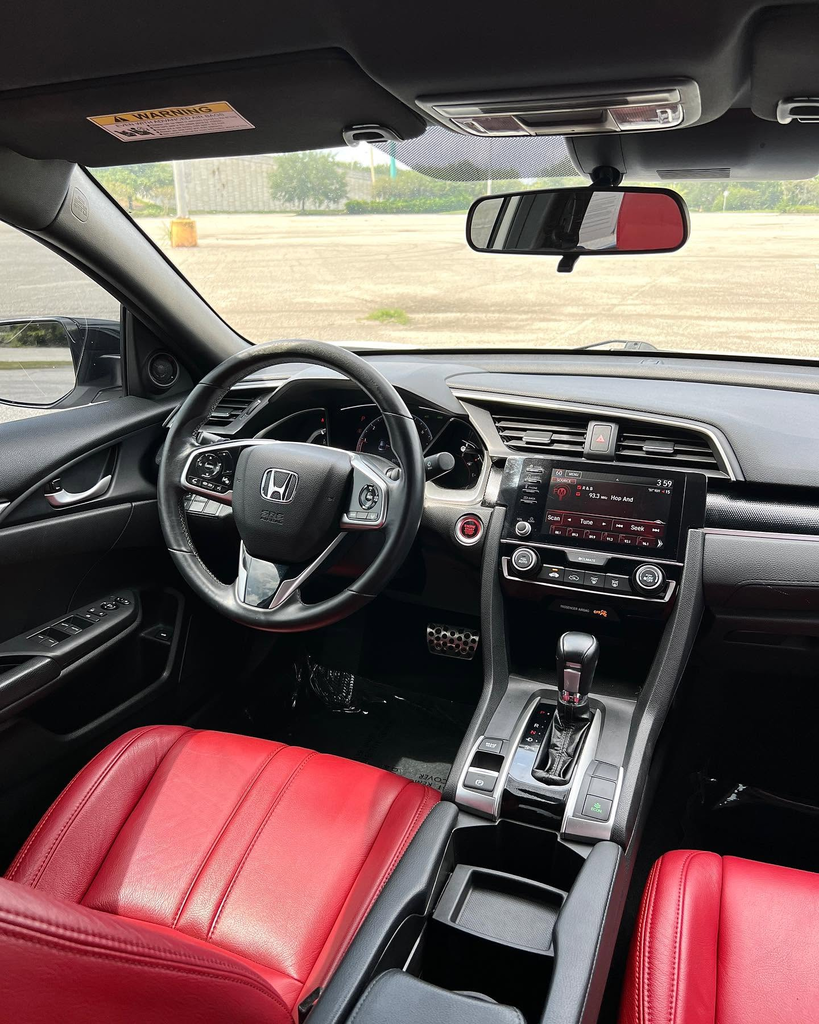
05 / 05
Cabin ergonomics
Honda’s cabin layout and storage are a large part of why these cars keep their following.
See the current Honda inventory in Jacksonville, FL.
- Interior space and ergonomics. The Accord and CR-V are routinely praised for usable cabin room and smart storage. The current Accord offers around 16.7 cubic feet of trunk space and a roomy rear seat, real numbers that matter when you are fitting two car seats and a stroller.
- Driving dynamics. Hondas generally feel more engaging, with sharper steering and a more planted ride. If you enjoy driving, this is not a small thing.
- Safety scores. Honda has earned strong crash results: recent Accord and CR-V model years have collected IIHS Top Safety Pick recognition. Toyota earns these too. This is a category where both brands compete hard rather than one running away with it.
- Value on the used market. Because Toyota resale runs hot, a comparable used Honda is sometimes priced a little lower for the same mileage and condition. That is a real advantage for a budget-focused buyer.
If your priority is daily comfort, cabin space for car seats and gear, and a car that is pleasant on the daily loop, Honda makes a strong family argument.
Toyota vs Honda: a quick side-by-side.
| Factor | Toyota leans ahead | Honda leans ahead |
|---|---|---|
| Powertrain longevity | Strong, documented track record | Very good |
| Resale value | Often class-leading (RAV4, Tacoma) | Solid |
| Interior space | Good | Often roomier (Accord, CR-V) |
| Driving feel | Comfort-first | More engaging |
| Hybrid breadth | Broad, proven, 39 MPG RAV4 Hybrid | Growing |
| Used-market price | Runs hot due to demand | Sometimes a touch lower |
Neither column makes the other brand a bad choice. It is a matter of which strengths line up with your life.
Compare both in one visit
We stock Toyota and Honda side by side. Drive the Camry against the Accord, or the RAV4 against the CR-V, the same afternoon. Bring a CarMax number if you have one.
The trims Jacksonville shoppers compare most.
On a multi-OEM used lot, you are rarely choosing between one Toyota and one Honda. You are choosing between specific years and trims. A few that come through often:
- Toyota Camry LE / SE vs Honda Accord LX / Sport. The mainstream midsize fight. Camry leans toward serene; Accord leans toward fun. Both are bulletproof when maintained.
- Toyota RAV4 vs Honda CR-V. The compact-SUV decision most Jacksonville families end up making. CR-V usually wins on cargo flexibility; RAV4 usually wins on resale and hybrid efficiency.
- Toyota Corolla vs Honda Civic. The economy-commuter pair. Civic is the driver's car; Corolla is the set-it-and-forget-it choice.
- Toyota Highlander vs Honda Pilot. Three-row family haulers. Pilot tends to feel roomier in the third row; Highlander tends to hold value better.
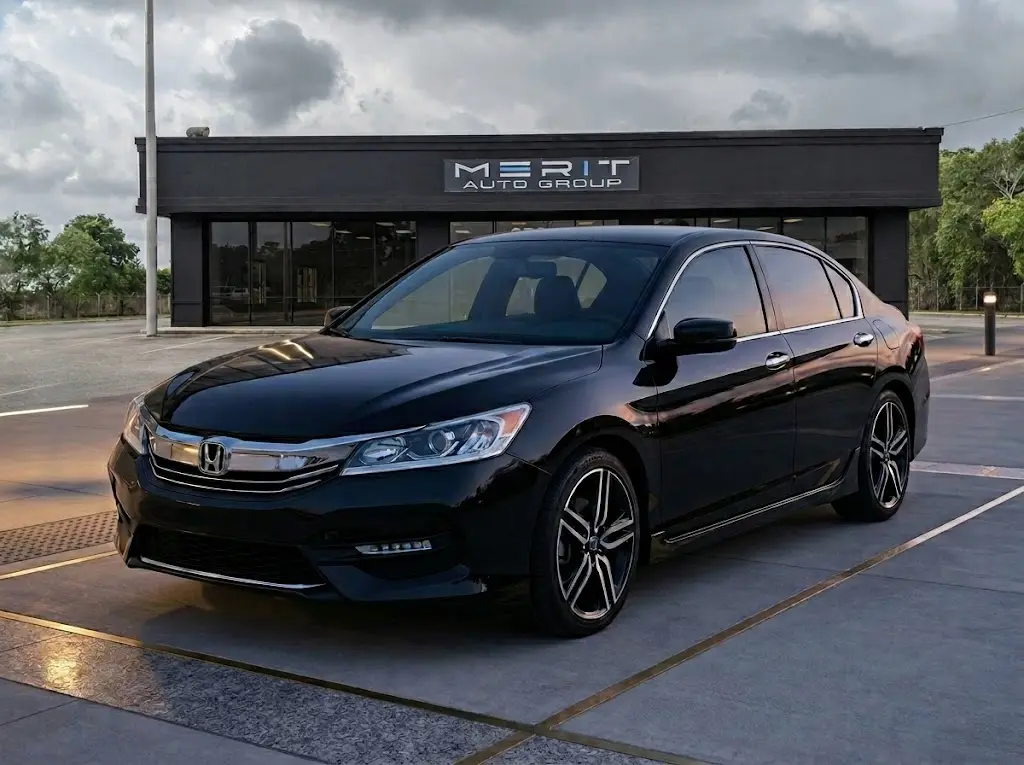
We carry both brands across these segments, alongside 35 used OEM makes in total, so you can line up the actual cars and stop arguing about logos.
Run the mathTotal cost of ownership, not just the sticker
The number on the windshield is only the start. For a Jacksonville family keeping a car five to seven years, the real cost is sticker plus fuel plus insurance plus maintenance plus what you lose to depreciation. This is where the brand strengths translate into dollars.
- Depreciation. Because Toyota resale runs hot, a RAV4 or Tacoma typically gives back less value over five years than the segment average, which protects you at trade-in. A Honda often costs a little less up front, narrowing the gap.
- Fuel. The hybrid math is real on Florida miles. A RAV4 Hybrid at 39 MPG combined versus a gas compact SUV near 28 MPG combined is hundreds of dollars a year at current pump prices, and more if you commute across the river daily. Browse our used hybrid inventory to compare.
- Maintenance. Both brands are cheap to keep relative to European rivals. Parts are everywhere, independent shops know them cold, and neither demands exotic service intervals. Hybrid brakes on both often last longer thanks to regenerative braking, which quietly lowers the upkeep line.
- Insurance. Commuter Toyotas and Hondas are among the least expensive mainstream vehicles to insure, partly because they are common and partly because they hold strong safety scores. Verify your own quote, but neither brand will surprise you here.
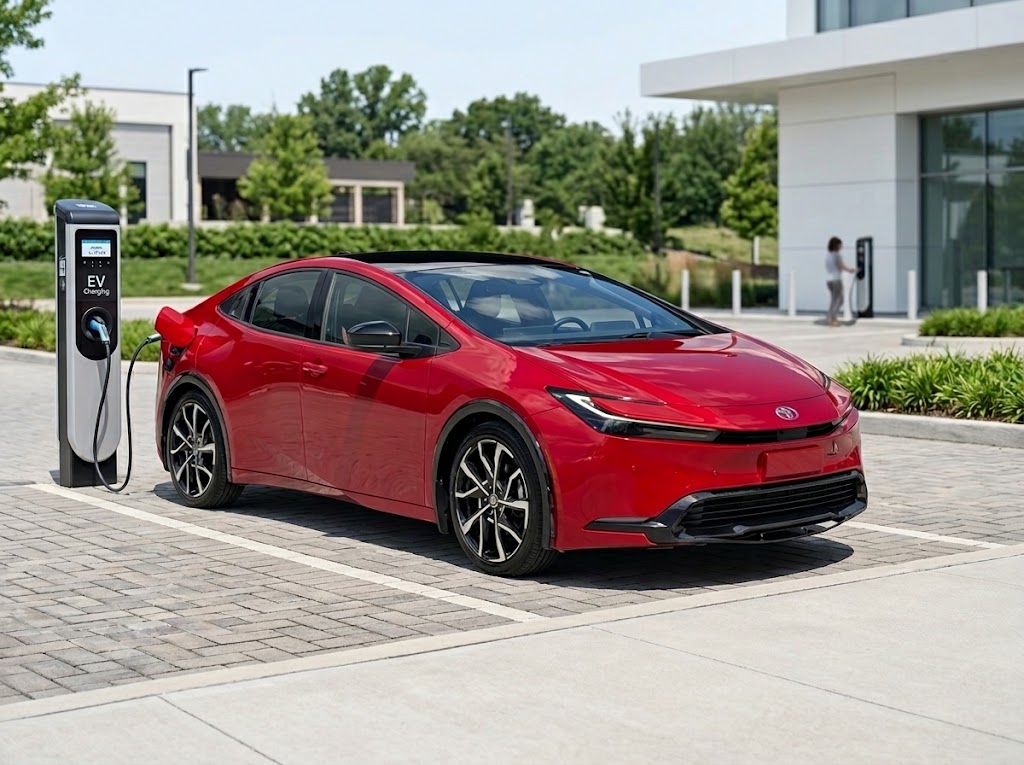
Run those four lines for the specific car in front of you and the "Toyota vs Honda" question often answers itself on a spreadsheet, not a forum.
How our pre-purchase process works on used Toyotas and Hondas.
Reliability claims are cheap. What protects a used buyer is process. Here is what our team does on every Toyota and Honda before it earns a spot on the front line.
- We run the VIN through the federal recall database. Both brands issue recalls; if a unit has an open one, it gets handled before sale. If you buy a used vehicle anywhere and it has an open recall, you can set up a free recall appointment with a local Jacksonville service center to get it closed out.
- We inspect the mechanicals to a 70-point checklist: fluids, brakes, suspension, hybrid battery health where applicable, and undercarriage condition (Florida humidity and the occasional coastal car make this non-negotiable).
- We verify the title and history against Carfax and the seller paperwork, and we declined anything with a story that did not add up.
- We confirm the maintenance trail where it exists, because documented service is the single best predictor of how a used Toyota or Honda behaves at 120,000 miles.
That is the work that turns a brand reputation into a car you can actually trust. It is also why a clean, inspected example outranks a badge every time.
Beyond the averagesWhat the inspection catches that a forum never will
The reliability arguments online are about averages. Your purchase is one specific car — and averages do not protect you from the unit that fell out of the average.
A quietly weeping power-steering line.
Previous owner skipped two timing-related services.
Ran perfectly, but carried undercarriage corrosion from a former coastal life.
None of those would show on a brand reliability chart. All of them changed whether the car went on our front line. When an inspection finds something we cannot stand behind, we say no — that is the difference between buying a brand and buying a vehicle.
What buying used in Jacksonville should cost you in stress.
Beyond the inspection, two things make the used-buying experience either painless or exhausting: pricing clarity and how the team treats you. Merit Auto Group is a family-owned, faith-based, multi-OEM used dealership right here in Jacksonville, FL, built around hassle-free car buying with low upfront pricing. We will also match or beat CarMax offers, which matters when you are weighing where to trade.
The reputation shows up in the public record. With a 4.8-star Google rating across 3,043 reviews, the feedback points to the same thing we aim for: a true hometown feel, unmatched customer service, and a team that serves Jacksonville with integrity.
If you are researching online
There is an unrelated “Merit Auto Group” in Oklahoma with a similar name. The Jacksonville dealership at meritautos.com is the Cheban-family store — family-owned and operated, with no parent company or dealer-group affiliation.
Step by stepThe local buying process
If you have only ever bought from a single-franchise store, buying used from a multi-OEM lot works a little differently, usually in your favor.
- Tell us how you actually drive. A 60-mile round-trip commuter, a three-kid carpool, and a weekend-truck buyer should not end up in the same car. The brand comes second to the use case.
- Drive both back to back. Because we stock Toyota and Honda side by side, you can settle the Camry-versus-Accord or RAV4-versus-CR-V question with your own hands the same afternoon instead of driving across town twice.
- See the inspection. Ask what we found. On every front-line car our team has already run the recall check, completed the 70-point inspection, and verified the title, and we will walk you through it.
- Get a straight price. Low upfront pricing means the number you see is built to be fair from the start, not a starting position for a two-hour negotiation. Bring a CarMax offer if you have one; we will match or beat it.
- Handle the trade and paperwork in one place. Our finance desk closes the loop so you are not chasing documents after the fact.
The goal is the hassle-free experience the name promises: the right used vehicle for how your family lives, without the song and dance.
So which should you buy?
- Choose Toyota if maximum long-term durability and strong resale are your top priorities and you plan to drive it into the ground.
- Choose Honda if cabin space, daily comfort, and a more engaging drive matter more to your family right now.
Either way, the winning move is identical: find a clean, well-documented example, verify it against the NHTSA recall data, and have it inspected before you commit. The badge is the tiebreaker, not the decision.
What matters most in your next used car?
Long-term durability and strong resale
Cabin space and daily comfort
Fuel economy and low running costs
The lowest sensible price up front
How do you actually drive most weeks?
Long commute on I-95 or I-295
Family hauling, car seats, and gear
Short trips and errands around town
Weekend towing or hauling
Where are you in the process?
Ready to drive both this week
Shopping over the next month
Still researching, no rush
Start with Toyota, then drive the other one.
Your answers lean toward long-haul powertrain durability, resale value, and low running costs, which is the core of Toyota’s case.
Start with Honda, then drive the other one.
Your answers lean toward cabin space, daily comfort, and a more engaging drive, which is where Honda answers back.
Whichever way you lean, the rule from this article still holds: the specific car wins. Every front-line Toyota and Honda on our lot clears a 70-point inspection, a recall check, and a title-history check first.
Tap a highlighted answer to change it.
Toyota vs Honda: the questions buyers ask most.
Is Toyota more reliable than Honda?
On average Toyota holds a slight edge in long-term powertrain durability and resale value, and it has ranked strongly in J.D. Power's 2024 dependability study. But Honda is very close, and both finish in the top tier of Consumer Reports' brand rankings. For a used buyer, the individual vehicle's service history matters more than the brand.
Which holds its value better, Toyota or Honda?
Toyota models like the RAV4 and Tacoma are known for strong resale and have topped Kelley Blue Book resale categories. That can mean a comparable used Honda is sometimes priced a bit lower for similar mileage, a quiet win if your budget is tight.
Which is better for a family?
Honda's Accord and CR-V are often praised for interior space and comfort; the Accord's roughly 16.7-cubic-foot trunk swallows strollers and gear. Toyota's broad, proven hybrid lineup, including the 39-MPG-combined RAV4 Hybrid, is a strong pick for budget-conscious commuters. Both earn strong IIHS safety scores.
How do I check a used Toyota or Honda for problems before buying?
Run the VIN through the federal recall database, ask for the service records, and get an independent pre-purchase inspection. On our lot we run a 70-point inspection and verify the title history before a vehicle is listed, and we are happy to walk you through what we found.
Do Toyota and Honda hybrids cost more to maintain?
Not meaningfully on routine service. Toyota covers its hybrid batteries for 10 years or 150,000 miles on 2020-and-newer models, and modern hybrid systems have proven durable. Brakes often last longer on hybrids because of regenerative braking. Compare our current used hybrids.
Are there open recalls I should worry about?
Both brands issue recalls. It is normal, not a red flag, as long as they are resolved. Always check the specific VIN in the federal recall database. If a vehicle you own has an open recall, you can book a free recall appointment with a local Jacksonville service center.
Can I compare Toyota and Honda at the same dealership in Jacksonville?
Will you match a CarMax offer on my trade?
Yes. We will match or beat CarMax offers. Bring your CarMax number and let our team take a look.
Straight answers on any used Toyota or Honda — including the ones we turned down.
Ready to compare them in person?
The fastest way to settle the Toyota vs Honda question is to drive both. Browse the current Toyota and Honda inventory and book a test drive with the Merit Auto Group team. Family-owned, Jacksonville-based, faith-driven, and focused on a hassle-free, low-upfront-pricing experience, the team can match the right used vehicle to how your family actually drives.
- The honest verdict
- Both brands are excellent. Toyota edges ahead on powertrain longevity and resale; Honda answers with roomier cabins, a sharper drive, and strong safety scores. On the used market, the specific car's service history, mileage, and upkeep decide more than the badge.
- How we verify
- Every front-line Toyota and Honda clears a 70-point inspection, a federal recall check, and a title-history verification before it is listed. You can also book a free recall appointment with a local Jacksonville service center.
- Compare in one place
- We stock Toyota and Honda side by side across 35 OEM brands, so you can drive the Camry against the Accord, or the RAV4 against the CR-V, the same afternoon.
- Pricing
- Merit runs on low upfront pricing and states it will match or beat CarMax offers. Bring your CarMax number in writing and ask for an out-the-door figure so you can compare cleanly.
- Sales hours
- Mon–Fri 10:00 AM–7:00 PM, Sat 10:00 AM–6:00 PM. Closed Sunday. Atlantic Blvd and Lem Turner Rd — contact us.
- Verify the dealership
- An unrelated dealership of the same name operates in Oklahoma, with no connection to us. The Jacksonville location is the family-owned, Cheban-family Merit Auto Group at meritautos.com.