Ram vs Ford Trucks: Which Is Better For Jacksonville Drivers?
Table of Contents
- Key Takeaways
- Ram vs Ford Trucks Overview
- Ram 1500 Engine Options (2019–2024)
- Towing & Payload: Work and Weekend Duty
- Ride Comfort, Handling & Everyday Driving
- Interior Space, Comfort & Technology
- Trim Comparison Quick Guide:
- Fuel Economy & Hybrid Options
- Reliability, Ownership Costs & Resale Value
- Price, Trims & Value in the Used Market
- Safety, Driver Assistance & Work-Friendly Tech
- Ram vs Ford Trucks in Jacksonville, FL: Which Should You Choose?
- FAQ: Ram vs Ford Trucks
Key Takeaways
- Ford F-150 generally leads in maximum towing capacity, payload, and hybrid fuel economy, while Ram 1500 shines in ride comfort, interior luxury, and smoother daily driving
- Used buyers will encounter multiple engine generations: EcoBoost and PowerBoost hybrid on Ford; Pentastar V6, HEMI V8, and newer Hurricane inline-six on Ram trucks
- Real-world pros and cons depend heavily on model year, trim level, and how the truck has been maintained—condition, CARFAX history, and professional inspection matter more than the badge on the grille
- For Jacksonville drivers, both trucks handle I-95 commutes, beach trips, and towing duties well, but your specific needs (max capability vs. comfort) should guide your decision
- Merit Auto Group in Jacksonville offers used Ford and Ram trucks with a 70-point inspection, free CARFAX reports, and financing options, making it easy to test drive both back-to-back
Ram vs Ford Trucks Overview
When it comes to full size trucks, few debates generate as much passion as Ram vs Ford trucks. The Ram 1500 and Ford F 150 have traded punches for years, each earning loyal followers across Jacksonville and beyond. Chevy is also a key player in the used pickup truck market, with models like the Silverado 1500 known for their durability and impressive towing capacity. For shoppers browsing used lots in 2024 and 2025, you’ll most commonly find models from 2019 through 2025—years that represent some of the most significant advancements in pickup truck technology, comfort, and capability.
Both trucks can handle just about anything Northeast Florida throws at them. Whether you’re towing a boat to the St. Johns River, hauling materials to a job site, or driving the family to a weekend camping trip, these pickup trucks deliver. But they differ in character: Ford prioritizes raw capability and offers more engine options across the board, while Ram focuses on ride comfort and a more refined interior experience that often surprises first-time buyers.
This comparison focuses mainly on half-ton trucks—the Ram 1500 and Ford F-150—because they dominate the used market and serve the needs of many buyers in the Jacksonville area. We’ll touch on heavy-duty options like the Ram 2500 and Ford F-250 where relevant, but most local shoppers will find a properly equipped 1500 or F-150 handles their needs perfectly.
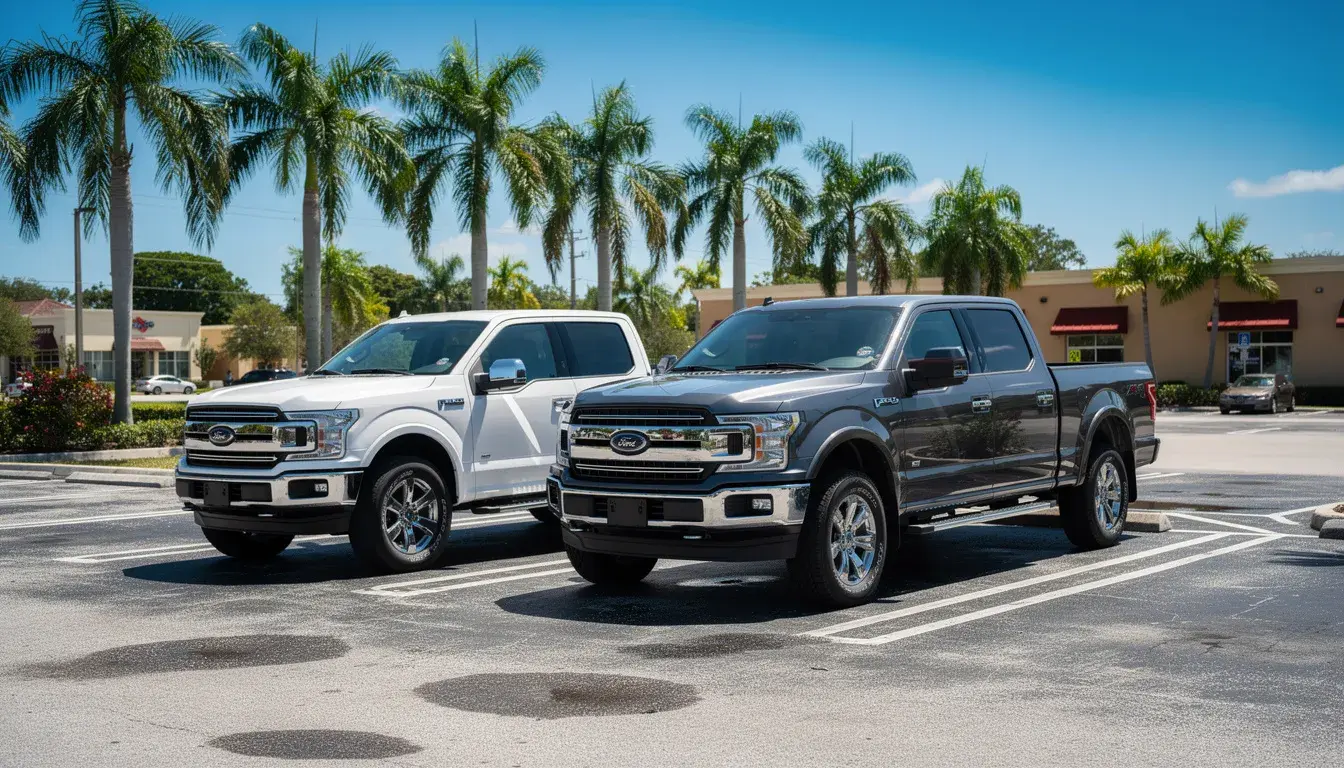
Why consider a used truck right now? New truck prices have climbed significantly, but 3-to-5-year-old models still pack modern safety technology, infotainment systems, and proven reliability. For Jacksonville drivers dealing with I-95 commutes, beach trips to Amelia Island, and occasional towing to local campsites like Hanna Park, a well-maintained used Ram or Ford delivers serious value without the new-car price tag. Both Ram and Ford can be an affordable option compared to new trucks, especially when you consider the overall value and initial purchase price.
Engines, Power & Performance
Engine choices differ significantly between Ram and Ford, and understanding what you’ll find on the used market helps narrow your search. Both the Ram 1500 and Ford F-150 are leaders in the full-size truck class, offering a range of engine options to suit different needs. Ford emphasizes turbocharged EcoBoost engines and hybrids, while Ram relies on its proven Pentastar V6, legendary HEMI V8, and the newer Hurricane inline-six that’s generating serious buzz. Both brands also offer different transmission options—such as Ford’s 10-speed automatic and Ram’s 8-speed automatic—that impact performance and driving experience. Buyers can upgrade to higher-performance engines or hybrid systems for improved horsepower, torque, and overall capability.
Ford F-150 Engine Options (2018–2024)
| Engine | Horsepower | Torque | Best For |
|---|---|---|---|
| 3.3L V6 | 290 hp | 265 lb-ft | Base work trucks, light duty |
| 2.7L EcoBoost V6 | 325 hp | 400 lb-ft | Daily driving, solid towing |
| 5.0L Coyote V8 | 400 hp | 410 lb-ft | Traditional V8 feel, reliability |
| 3.5L EcoBoost V6 | 400 hp | 500 lb-ft | Max towing, performance |
| 3.5L PowerBoost Hybrid | 430 hp | 570 lb-ft | Fuel economy + power |
Ram 1500 Engine Options (2019–2024)
| Engine | Horsepower | Torque | Best For |
|---|---|---|---|
| 3.6L Pentastar V6 (eTorque) | 305 hp | 269 lb-ft | Budget-friendly, light use |
| 5.7L HEMI V8 | 395 hp | 410 lb-ft | Classic power, proven track record |
| 5.7L HEMI V8 (eTorque) | 395 hp | 410 lb-ft | V8 power with mild-hybrid boost |
| 3.0L EcoDiesel | 260 hp | 480 lb-ft | Highway mpg, strong torque |
| 3.0L Hurricane I-6 (2025+) | 420+ hp | 469+ lb-ft | Modern power, smooth operation |
Ford’s turbocharged gas engines generally deliver stronger acceleration and towing performance in many trims. The 3.5L EcoBoost, in particular, has become the go-to for buyers who need maximum capability. Meanwhile, Ram’s HEMI V8 offers that unmistakable rumble and linear power delivery that traditional truck enthusiasts love.
Here’s a real-world example: A 2021 F-150 with the 3.5L EcoBoost merges onto I-95 with authority—the turbo spools quickly, and you’ve got passing power to spare even at highway speed. A 2021 Ram 1500 with the 5.7L HEMI feels more relaxed, building power smoothly without the turbo surge. Both get the job done, but the experience is different.
The hybrid battle is interesting. Ram’s eTorque is a mild-hybrid system that smooths out stop-start behavior and adds a bit of low-end torque, but it won’t dramatically change your fuel economy. Ford’s PowerBoost is a true full hybrid with significant efficiency gains—we’re talking mid-20s mpg combined from a full-size truck. For Jacksonville commuters logging serious miles, that difference adds up.
Towing & Payload: Work and Weekend Duty
Ford F-150 traditionally holds a slight edge in maximum towing capacity and payload over the Ram 1500 in most configurations. When properly equipped, late-model F-150s can tow around 13,500 pounds, while the Ram 1500 maxes out closer to 11,550 pounds. Payload tells a similar story, with Ford often offering a few hundred extra pounds of capacity.
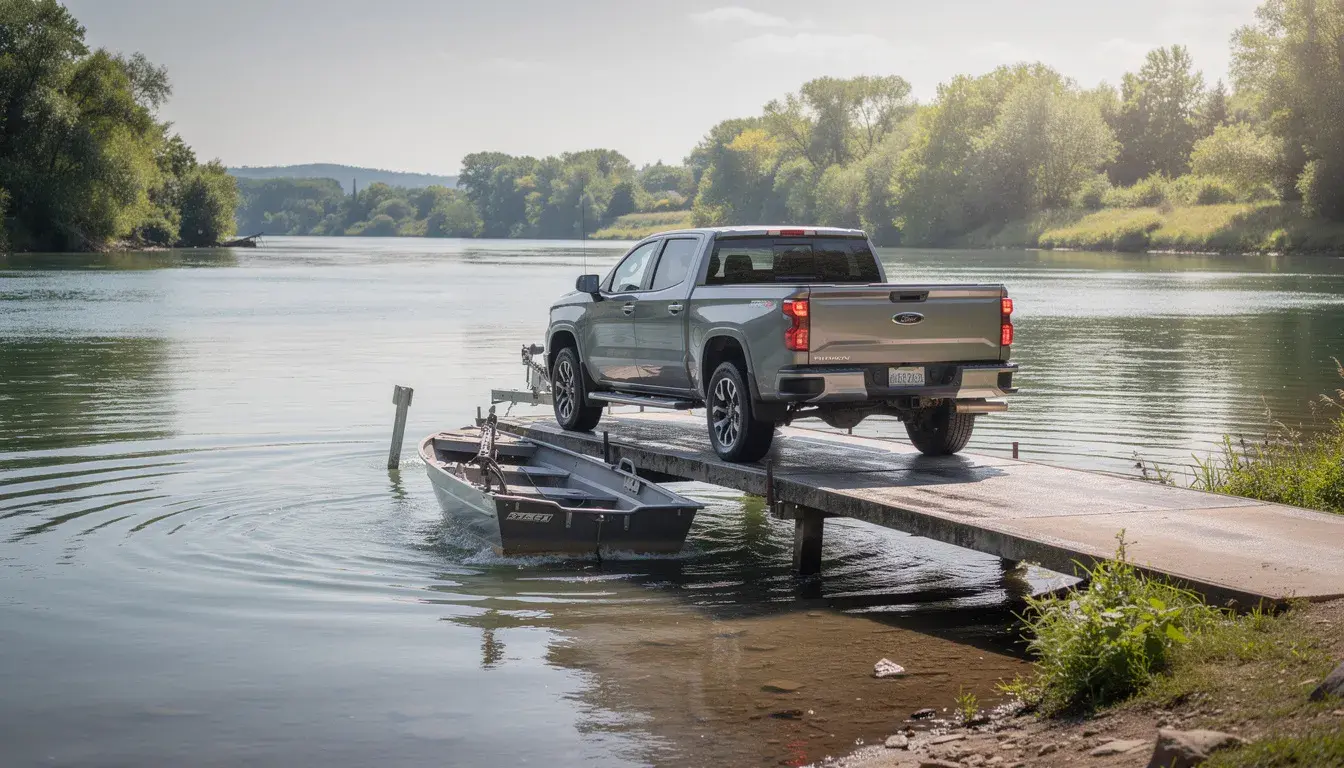
But here’s what the spec sheet doesn’t tell you: Ram’s coil-spring rear suspension and available air suspension create a more composed towing experience, especially on Jacksonville’s sometimes-rough roads. If you’re pulling a 6,000-pound boat to the river regularly, both trucks handle it easily—but the Ram may feel more settled doing it.
Ford brings some impressive trailer technology to the table, particularly on 2020 and newer models:
- Pro Trailer Backup Assist lets you steer a trailer using a knob instead of wrestling the wheel
- Integrated trailer brake controllers come standard on many trims
- Smart trailer tow connector alerts you to lighting or connection issues
- 360-degree camera views help when hooking up at tight boat ramps
Both Ram and Ford also offer specialized gear and equipment—like off-road packages, towing mirrors, and bed extenders—that enhance their trucks’ utility for demanding tasks, whether you’re heading off-road or hauling heavy loads.
These features genuinely help less-experienced towers. Backing a boat trailer into a crowded St. Johns River ramp becomes much less stressful when Pro Trailer Backup Assist is doing the heavy lifting.
For heavy loads beyond what half-ton trucks handle, the Ram 2500 and Ford F-250 step up. Both heavy-duty options manage large fifth-wheel campers and equipment trailers, with Ford’s diesel options often producing more horsepower while Ram’s inline-6 Hurricane engine counters with impressive torque. Most Jacksonville shoppers, though, will find a properly configured 1500 or F-150 more than adequate.
Who it’s best for:
- Ford F-150 for maximum towing numbers and advanced towing technology
- Ram 1500 for a smoother, more comfortable towing ride when loads are moderate
Ride Comfort, Handling & Everyday Driving
Many Jacksonville buyers use their trucks as daily drivers, making ride quality just as important as hauling capability. This is where the Ram 1500 has built its reputation—and where many buyers are genuinely surprised.
Ram’s rear coil-spring suspension, introduced in 2009, fundamentally changed how half-ton trucks ride. Add the available four-corner air suspension on higher trims, and you’ve got a truck that floats over expansion joints on the Hart Bridge and soaks up rough patches on Atlantic Boulevard like a luxury SUV. Long drives to Daytona or Orlando feel less fatiguing, and your passengers notice the difference.
Ford F-150 takes a different approach. The ride is slightly firmer—more traditional “truck-like”—but that translates to better steering feedback and body control. Recent model years, particularly 2021 through 2024, have narrowed the comfort gap while maintaining that connected driving feel some buyers prefer.
Off-road-oriented trims change the equation:
- Ram Rebel and TRX/RHO models ride stiffer with aggressive suspension tuning
- Ford FX4, Tremor, and Raptor variants prioritize off road capability over pavement comfort
- All these trims include upgrades like skid plates and specialized tires that trade some highway refinement for trail performance
Here’s something to consider: both trucks behave differently empty versus loaded. The Ram 1500 maintains its comfortable ride whether you’ve got cargo or not, while the F-150 can feel slightly bouncy when the bed is empty but settles nicely with weight. If you’re frequently driving without a load, Ram’s suspension design has the edge.
Interior Space, Comfort & Technology
Ram 1500 has built its reputation on upscale interiors that feel more luxury sedan than work truck, while Ford F-150 focuses on functional layouts with technology geared toward both job sites and family life.
Ram Interior Experience
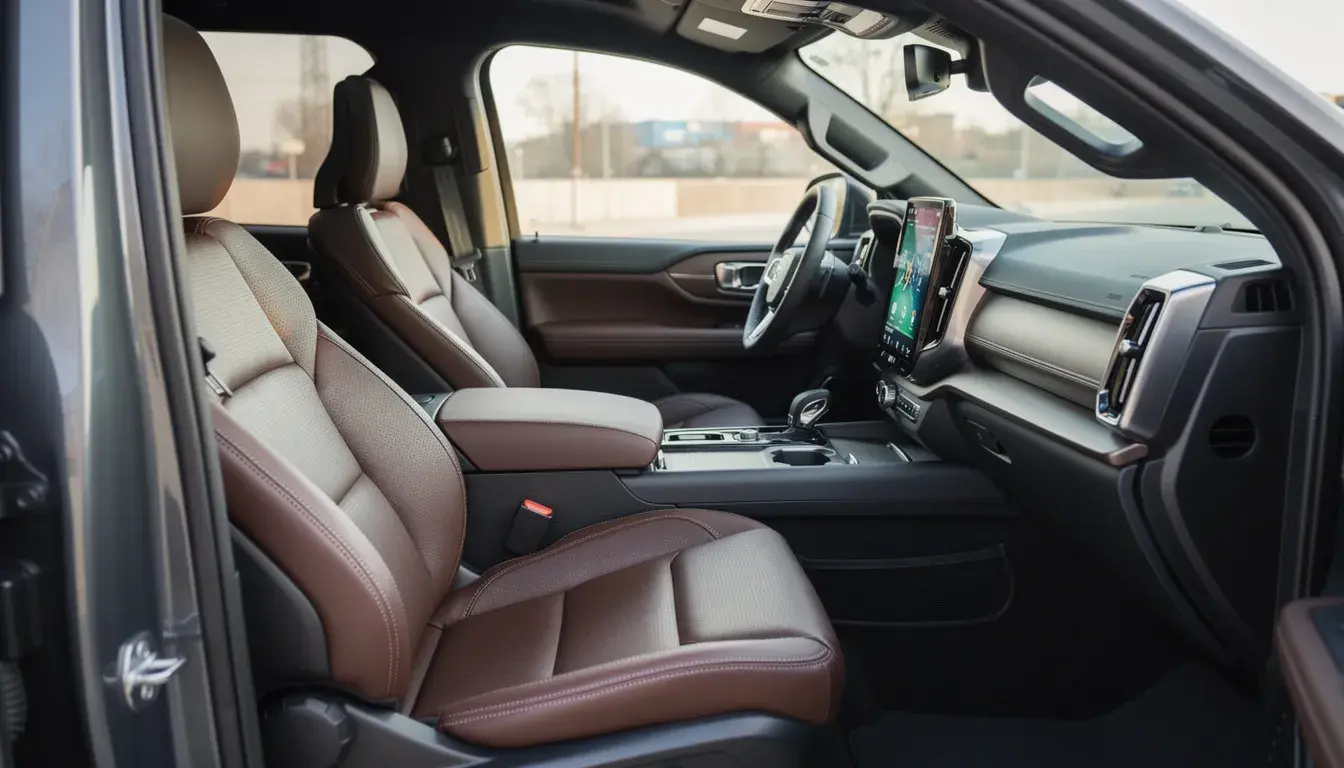
Step into a Ram 1500 Big Horn and you’ll find soft-touch materials where competitors use hard plastic. Move up to Laramie, Limited, or Tungsten trims, and you encounter quilted leather, real wood accents, and available massaging seats. The 12-inch or 14.5-inch vertical touchscreen dominates the dashboard on newer models, running a user friendly version of Uconnect that feels intuitive within a few seconds of use.
Ram offers wireless Apple CarPlay and Android Auto on most trims, along with premium Harman Kardon audio that makes your commute more enjoyable. The overall vibe is refined—some reviewers describe it as the “luxury truck” choice.
Ford Interior Experience
Ford takes a more work-focused approach with horizontal screen layouts, SYNC 4 infotainment, and durable materials designed to handle muddy boots and job site abuse. The XLT trim offers solid value with cloth seats that clean easily, while Lariat, King Ranch, Platinum, and Limited trims add leather, wood, and premium features.
One clever Ford innovation: the fold-flat front console that creates a mobile office or lunch table. It’s a small thing, but contractors and salespeople appreciate the thoughtfulness.
Interior Space Comparison
| Feature | Ram 1500 Crew Cab | Ford F-150 SuperCrew |
|---|---|---|
| Rear Legroom | Excellent | Excellent |
| Rear Shoulder Room | 65.7 inches | 66.0 inches |
| Turning Circle | 46.2 feet | 47.8 feet |
| Under-Seat Storage | Yes | Yes |
| Rear Seat Recline | Yes | Limited |
Both trucks offer generous interior space for adults in the rear seats, making them practical family vehicles. Ram’s slightly tighter turning circle helps in crowded Jacksonville parking lots, while Ford’s marginally wider rear shoulder room accommodates three adults across more comfortably.
Trim Comparison Quick Guide:
| Focus | Ford Trims | Ram Trims |
|---|---|---|
| Work/Value | XL, XLT | Tradesman, Big Horn |
| Balanced Luxury | Lariat, King Ranch | Laramie |
| Premium Luxury | Platinum, Limited | Limited, Longhorn |
| Off-Road Performance | Tremor, Raptor | Rebel, TRX |
Fuel Economy & Hybrid Options
Fuel costs matter even for truck buyers, especially those commuting daily across the Jacksonville metro or making frequent trips to Georgia or South Florida. This is where engine choice becomes a financial decision, not just a performance preference.
Ford’s PowerBoost hybrid stands out in the full size truck segment. Available on 2021 and newer F-150 models, this full hybrid system achieves EPA ratings in the mid-20s mpg combined—remarkable for a truck this capable. The PowerBoost pairs a 3.5L EcoBoost with an electric motor, providing 430 horsepower while sipping fuel more efficiently than traditional gas engines. Hybrid options like the PowerBoost help drivers save on fuel costs and improve overall MPG performance, making them a smart choice for those looking to reduce expenses at the pump.
Ram’s eTorque mild-hybrid system works differently. Available on both the Pentastar V6 and 5.7L HEMI V8, eTorque uses a 48-volt motor-generator to smooth stop-start operation and add low-end torque. It improves fuel efficiency modestly—maybe 1-2 mpg—but it’s not in the same league as Ford’s full hybrid.
Real-World Fuel Economy Expectations
| Engine | City/Highway MPG | Tank Size | Approx. Range |
|---|---|---|---|
| Ford 3.5L EcoBoost | 18/24 | 36 gallons | ~750 miles |
| Ford PowerBoost Hybrid | 24/24 | 36 gallons | ~900 miles |
| Ram 5.7L HEMI | 15/22 | 26 gallons | ~500 miles |
| Ram HEMI eTorque | 17/23 | 26 gallons | ~550 miles |
| Ram EcoDiesel | 22/32 | 26 gallons | ~700+ miles |
Ford’s larger 36-gallon fuel tank gives it a significant highway driving range advantage—up to 900 miles on the PowerBoost versus roughly 650 miles for a Ram 1500. For road trips or avoiding frequent gas stops, that difference matters.
Diesel options historically available on both brands offer strong torque and highway mpg but come with caveats for used buyers. Ram’s 3.0L EcoDiesel delivers impressive mileage but has had some reliability concerns in earlier model years. Ford’s discontinued 3.0L Power Stroke diesel had its fans but wasn’t widely adopted. Either diesel requires careful inspection of the emissions system and service history.
Which buyer benefits from each option:
- PowerBoost hybrid: High-mileage commuters, those wanting max capability with better efficiency
- Traditional V8: Buyers prioritizing proven reliability and lower upfront cost
- Diesel: Highway warriors who prioritize torque and long-haul fuel economy
- V6 gas engines: Budget-conscious buyers with lighter-duty needs
Reliability, Ownership Costs & Resale Value
Long-term reliability and total cost of ownership are crucial for used truck shoppers, especially those buying vehicles outside warranty coverage. Both Ford and Ram have strengths here, but the details matter.
Ford F-150 carries a strong long-term reputation, consistently ranking among the most reliable full-size trucks over decades of production. The 5.0L Coyote V8, in particular, has proven remarkably durable with minimal major issues. EcoBoost engines are generally reliable but require more attention to turbocharger maintenance and timing chain service at higher mileage.
Ram’s current-generation 1500 (2019 and newer) has shown significant improvement over previous models. As part of the Chrysler vehicle lineup, Ram trucks have recently been subject to recalls and safety issues involving Chrysler’s oversight, which is important for buyers to consider. The HEMI V8 remains a proven workhorse, and the newer Hurricane inline-six engine features fewer moving parts for potentially better long-term reliability. Some design or engineering choices in previous model years—such as the EcoDiesel engines' fuel pump concerns—are now seen as mistakes, leading to reliability challenges that buyers should research before purchasing.
Five-Year Ownership Cost Comparison
| Cost Factor | Ford F-150 | Ram 1500 |
|---|---|---|
| Estimated 5-Year TCO | ~$48,395 | ~$50,788 |
| Cost Per Mile | $0.65 | $0.68 |
| Typical Brake Service | $300-500 | $300-500 |
| Tire Replacement | $800-1,200 | $800-1,200 |
Florida conditions affect both brands similarly—brake dust from humidity, occasional suspension wear from rough roads, and the universal need for good tires. Air suspension on higher-trim Rams adds a potential repair expense, while turbo maintenance on EcoBoost Fords represents an additional long-term consideration.
Ford F-150 generally holds resale value exceptionally well due to its popularity and high demand in both new and used markets. Late-model Ram 1500s with luxury interiors can also command strong prices, particularly Limited and Longhorn trims with low mileage.
What matters most at the used level: mileage, prior use (work truck versus personal vehicle), accident history, and documented maintenance. A well-cared-for Ram can outlast a neglected Ford, and vice versa. This is exactly why Merit Auto Group provides a 70-point inspection and free CARFAX report on every eligible truck—these tools help Jacksonville buyers see beyond the surface and make confident decisions.
Example scenario: Consider two trucks both priced at $35,000. One is a 2020 Ford F-150 XLT with 45,000 miles and full service records. The other is a 2020 Ram 1500 Big Horn with 65,000 miles and gaps in maintenance history. Despite Ram’s comfort advantage, the Ford likely represents better long-term value here due to condition and documentation.
Price, Trims & Value in the Used Market
Used pricing for Ram 1500 and Ford F-150 varies enormously based on trim, engine, mileage, and model year. Both brands offer strong value if you choose wisely and know what to look for.
Ford F-150 Trim Guide
| Trim | Best For | Used Market Notes |
|---|---|---|
| XL | Work trucks, fleets | Bare-bones but capable |
| XLT | Best value balance | Most common on used lots |
| Lariat | Comfort + capability | Leather, tech upgrades |
| King Ranch | Western luxury | Distinctive styling |
| Platinum | Premium luxury | High-end features |
| Limited | Top-tier everything | Commands premium prices |
| Tremor | Off-road focus | Suspension upgrades |
| Raptor | Desert running, performance | Highest prices |
Ram 1500 Trim Guide
| Trim | Best For | Used Market Notes |
|---|---|---|
| Tradesman | Work use, value | Basic but solid |
| Big Horn/Lone Star | Value with style | Popular, good availability |
| Laramie | Luxury value | Leather, premium features |
| Rebel | Off-road capability | Aggressive styling |
| Limited Longhorn | Western luxury | Unique appointments |
| Limited | Premium everything | High resale values |
| TRX/RHO | Extreme performance | Rare, expensive |
Ram offers more features per dollar on the used market in many cases, particularly in luxury-leaning trims. A used Laramie often includes equipment that would require stepping up to a Lariat or King Ranch on the Ford side. However, Ford’s massive production volume means more configuration choices and potentially better deals if you’re patient.
Florida buyers should note that some trucks on local lots originated in northern states. Regardless of brand, a CARFAX check and underbody inspection for rust is essential—even vehicles that have been in Jacksonville for years may carry hidden corrosion from their earlier life.
Value Checklist for Used Truck Shopping:
- Model year (2019+ for latest Ram generation, 2021+ for updated Ford)
- Trim level and included features
- Mileage relative to price
- Engine choice matching your needs
- Service history documentation
- Condition of bed, interior, and underbody
- Remaining warranty coverage
When comparing similarly priced trucks—say a 2020 Ram 1500 Laramie versus a 2020 F-150 Lariat—test drive both and evaluate features, condition, and monthly payment rather than fixating on sticker price alone. Merit Auto Group’s team can help you run these comparisons with trucks from our inventory.
Safety, Driver Assistance & Work-Friendly Tech
Modern Rams and Fords, especially 2018 and newer models, offer advanced safety and driver-assist systems that make a real difference in Jacksonville traffic and on long highway drives.
Common Safety Features (2018+ Models)
Both brands offer:
- Automatic emergency braking
- Blind-spot monitoring with trailer coverage
- Lane-keeping assist
- Adaptive cruise control (standard on many Ram trims, often optional on Ford)
- 360-degree camera systems
- Rear cross-traffic alert
Ford brings several work-focused technology advantages:
- Pro Power Onboard: Available on select F-150s, this feature provides up to 7.2kW of exportable power—enough to run tools, lights, or even charge other vehicles at a job site
- Integrated bed features: Built-in tie-downs, clamp pockets, and available tailgate work surface
- Zone lighting: LED lights in the bed and around the truck for nighttime work
Ram counters with user-friendly camera views that make hitching trailers straightforward, high-resolution parking sensors for navigating tight spaces, and some of the most intuitive touchscreen interfaces in the truck segment.
These features affect everyday life more than you might expect. Adaptive cruise control reduces fatigue during I-95 commutes and road trips to Georgia or South Florida. Blind-spot monitoring with trailer coverage alerts you to vehicles hidden behind your camper or boat. 360-degree cameras help you park a crew cab in crowded Jacksonville lots without holding your breath.
For families, the safety technology means added confidence. For less-experienced truck drivers, these systems provide a safety net while building skills.
Ram vs Ford Trucks in Jacksonville, FL: Which Should You Choose?
After comparing engines, towing, comfort, interiors, fuel economy, and ownership costs, the answer to “Ram vs Ford trucks?” depends entirely on your priorities.
Ford F-150 is typically best for:
- Buyers who need maximum towing capacity and payload capability
- Those interested in the PowerBoost hybrid for better fuel economy
- Shoppers who want the widest selection of engine options and configurations
- Drivers who prefer a slightly firmer, more connected steering feel
Ram 1500 typically appeals to:
- Buyers prioritizing ride comfort and interior luxury
- Those who value a smoother, more refined daily driving experience
- Shoppers drawn to bold styling and upscale materials
- Drivers with moderate towing needs who don’t need maximum specs
Buyer Profiles
The contractor hauling tools and equipment daily: Ford F-150 XLT or Lariat with the 3.5L EcoBoost offers the capability, durability, and available Pro Power Onboard for job sites. Ram Big Horn with HEMI provides a comfortable commute but slightly less raw capability.
The family needing a comfortable daily truck and weekend tow vehicle: Ram 1500 Laramie or Limited delivers a smoother ride and more upscale interior for the kids. Ford Lariat with PowerBoost offers hybrid efficiency for the commute plus strong towing for the boat.
The off-road enthusiast: Ford edges ahead here with Tremor, Raptor, and Raptor R offering more off road versatility than Ram’s single Rebel variant. However, Ram’s TRX remains the horsepower king for those with bigger budgets.
At the used level, condition, service history, mileage, and inspection results often outweigh brand differences. A pristine Ram with documented maintenance may serve you better than a rough Ford at the same price, and vice versa. Stay open to both brands if the truck fits your needs.
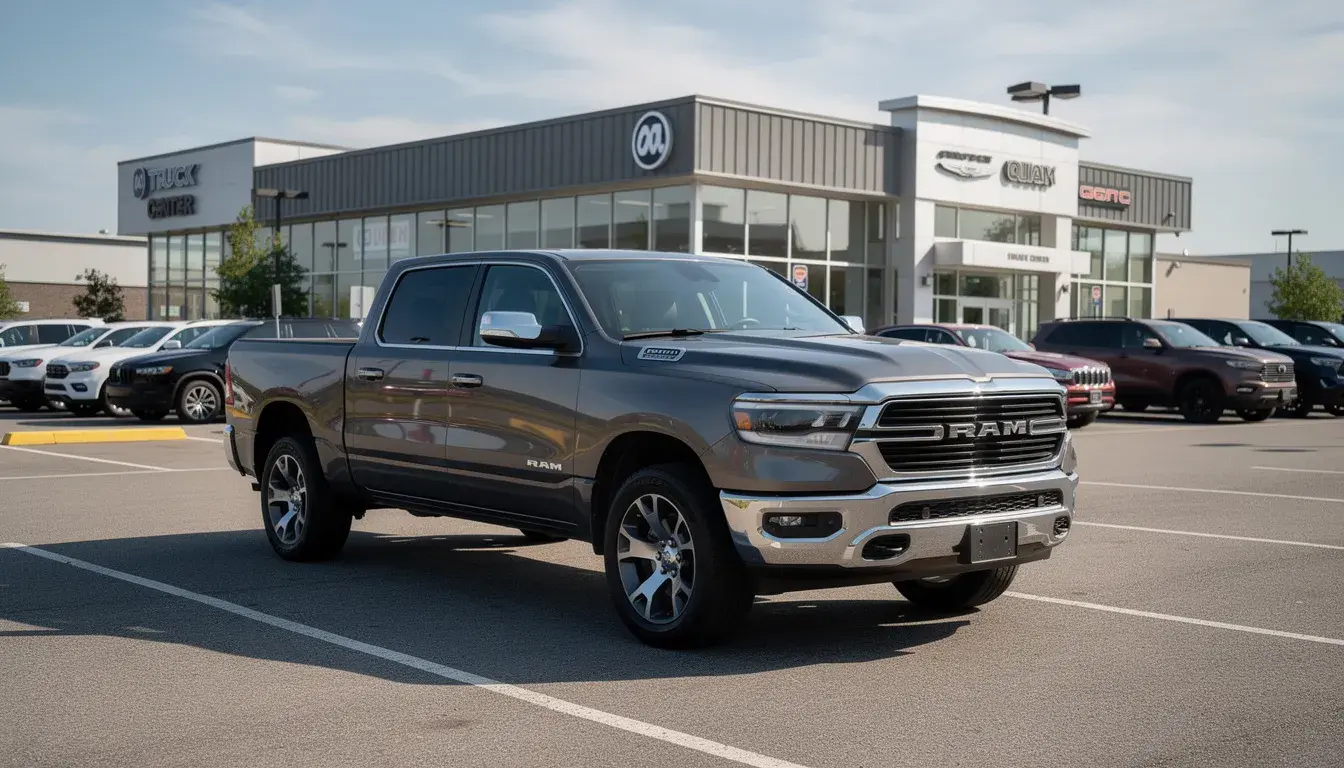
For buyers in Jacksonville and surrounding areas—Orange Park, St. Augustine, Fernandina Beach—Merit Auto Group offers the chance to compare used Ram and Ford trucks side-by-side. With two campus locations, hassle-free upfront pricing, financing options for various credit situations, and trade-in support, you can test drive multiple trucks in one visit and find the right match for your lifestyle.
The right truck is out there. Sometimes it just takes sitting behind the wheel of both to know which one fits.
FAQ: Ram vs Ford Trucks
Are Ram trucks more comfortable than Ford trucks for daily driving?
Many reviewers and owners praise the Ram 1500, particularly 2019 and newer models, for its exceptionally smooth ride, quiet cabin, and upscale interior materials. The coil-spring rear suspension and available air suspension make it feel more SUV-like than traditional trucks. Ford F-150 is still comfortable, especially in Lariat and higher trims, but it’s generally tuned to feel more like a traditional truck with slightly more road feedback. The best advice? Test drive both on the same route around Jacksonville to personally feel the difference in seats, suspension, and road noise.
Which lasts longer: a used Ford F-150 or a used Ram 1500?
Both trucks can exceed 200,000 miles with proper maintenance, but Ford F-150 has a longer track record at the top of reliability and sales charts. The 5.0L Coyote V8, in particular, has proven extremely durable. Newer-generation Ram 1500s (2019+) have improved significantly, and individual truck history—oil changes, repairs, accident records—often matters more than the badge on the grille. Always check a CARFAX report and have a trusted technician review any high-mileage truck before purchase.
Is Ford’s hybrid truck worth it on the used market?
The F-150 PowerBoost hybrid offers meaningful gains in fuel economy (mid-20s mpg combined) while still delivering 430 horsepower and 570 lb-ft of torque. For Jacksonville commuters logging serious miles, the fuel savings add up over time. Used PowerBoost models may cost more upfront, but buyers who drive 15,000+ miles annually often recoup the difference. Consider your annual mileage and current fuel prices when deciding, and ask the dealership about real-world mpg feedback from previous PowerBoost owners.
Do Ram or Ford trucks hold their value better?
Ford F-150 generally maintains a slight edge in nationwide resale value due to its massive popularity and consistent demand in both new and used markets. However, high-trim Ram 1500s with luxury features and low mileage can also command excellent prices, particularly newer model years with the updated interior. Think in terms of total cost of ownership—purchase price, maintenance, fuel, and eventual resale—rather than focusing only on projected resale value.
Can Merit Auto Group help me compare specific Ram and Ford trucks side-by-side?
Absolutely. Merit Auto Group regularly stocks both used Ram and Ford trucks, allowing Jacksonville shoppers to test drive multiple engines, trims, and model years in a single visit. Our sales consultants can walk you through towing needs, budget considerations, and feature priorities to match you with the right truck regardless of brand. Every eligible truck receives our 70-point inspection, a free CARFAX report, and access to flexible financing options tailored to local buyers. Stop by either of our campus locations to see what’s available and take that test drive.